A very accomplished organic chemist has died. Albert Jakob Eschenmoser, 97, retired professor of chemistry at ETH, Zurich (the Swiss Federal Institute of Technology) and The Skaggs Institute for Chemical Biology at The Scripps Research Institute in La Jolla, California. ETH Zurich is regarded as one of the best universities in the world. It is focused primarily on science, technology, engineering, and mathematics.
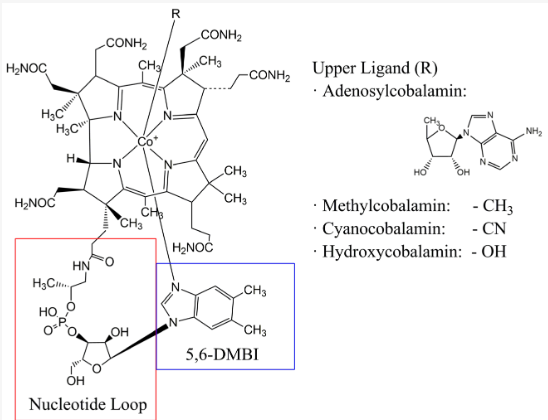
Eschenmoser is perhaps best known for his work on the synthesis of vitamin B12 along with Robert B. Woodward of Harvard University. Between the two groups this synthesis was accomplished over many years and required the labor of more than 100 students and postdocs grinding through their short times in the lab. This landmark synthesis was published in 1973.
This was perhaps the most complex organic synthesis of the time in 1973. Note that the wedge lines are meant to indicate that the feature is coming up out of the page and the dashed lines are jutting behind the page. Natural B12 has only 1 configuration of chemical bonds. Swapping something with a wedge with a dashed line group produces a different substance called a diastereomer. This all by itself makes the synthesis of B12 very difficult. Not only do the atoms have to be connected properly, but their arrangement in space must be correct also. This is called stereochemistry.
My, my, my. Rober F. Kennedy Jr. really screwed the pooch with his comments on ethnically targeted COVID-19. Reportedly, he said “there is an argument that (COVID-19) is ethnically targeted”, adding “Covid-19 is targeted to attack Caucasians and Black people. The people who are most immune are Ashkenazi Jews and Chinese …. we don’t know whether it’s deliberately targeted or not.” If this quote is correct, he did not actually say that COVID-19 was ethnically targeted, but rather that “there is an argument …”. It is much like saying “is Bob still beating his wife? I just don’t know …” Whether he endorses the targeting theory or not isn’t clear, but he was willing to trot out this provocative statement to make his point. There was much blowback. Given the racial undertones, it was a large blunder.
RFK Jr. is well known as an advocate for conspiracy theories, some of which are whoppers. The online news magazine Slate has an article that compiles them. I find that his portfolio of mania is exhausting. The thought of pushing back against such seems like a fool’s errand. It reminds of a line in the movie True Grit: “What have you done when you have bested a fool?” What is the point in debating him?
RFK Jr. is a Harvard grad and went the University of Virginia School of Law to get his JD degree. He had a few slip ups early in his career but recovered. He spent most of his career as an environmental lawyer and has fought many laudable battles for environmental justice. Somewhere along the line he went off the rails and landed in the crackpot ferry to conspiracy land. RFK Jr. is a penetrating anti-vaccine voice who can draw large crowds if for no other reason just to see him.
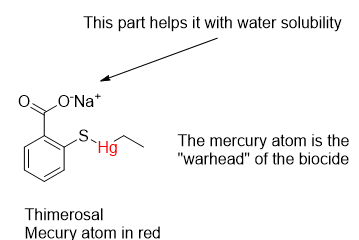
The substance of concern behind much of the anti-vaccine Sturm und Drang is Thimerosal. It is a synthetic organomercurial compound that is effective against bacteria and fungi. Its biocidal properties have been known since the around 1930. Mercurials have been used since the time of the Swiss alchemist Paracelsus (Philippus Aureolus Theophrastus Bombastus von Hohenheim) in the 1500’s. Paracelsus is known for the pronouncement that “only the dose makes the poison.” This remains a fundamental principle of toxicology.
The early mercurial medicaments used by Paracelsus were simple inorganic salts of mercury(II) like mercuric chloride, HgCl2, or mercury(I) like mercurous chloride, Hg2Cl2, also known as the mineral calomel. Mercuric chloride is prepared by treating liquid mercury with sulfuric acid followed by addition of sodium chloride for anion exchange. Mercurous chloride is prepared by heating mercuric chloride with mercury to do the reduction of Hg++ to Hg+.
Thimerosal is sometimes wrongly compared to methylmercury, a known and tragically toxic compound with the formula CH3Hg+X–. The X anion can be chloride, hydroxide or a thiol, depending on the source. It is an easy comparison to make because of the similarity of methyl (CH3) to the ethyl (CH3CH2) hydrocarbon group in Thimerosal, but research has proven it to be a poor comparison. Methylmercury compounds can be produced by aquatic microorganisms in water bodies in the presence of inorganic mercury. The methylation of natural biomolecules is a well-known process.
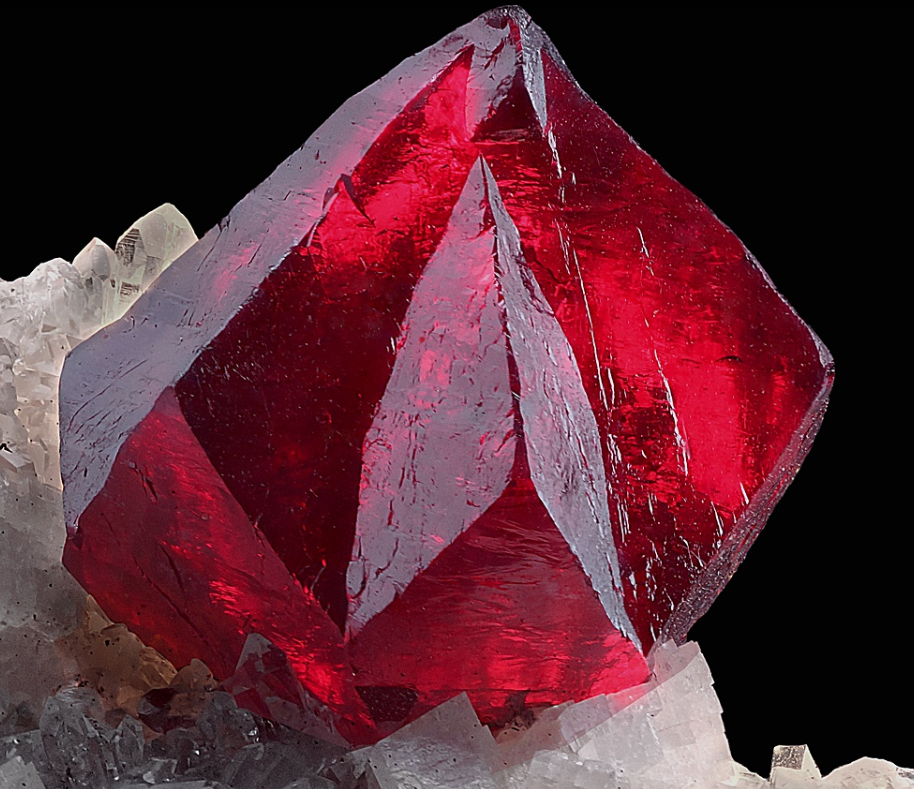
Like many metals, mercury has an affinity for sulfur, occurring naturally as mercury (II) sulfide, HgS, as deposits of Cinnabar or as a minor constituent with other minerals. It also has an affinity for sulfur-containing amino acids such as methionine, cysteine and homocysteine found in proteins. In the bloodstream mercury binds with proteins like albumin to the extent of 95-99 %. While in the body and exposed to water it decomposes to thiosalicylate and ethylmercury. Ethylmercury cation (CH3CH2Hg+) disperses widely and can cross the blood-brain and placental barriers.
According to Doria, Farina, and Rocha (2015) in Applied Toxicology, a comparison of effects between methylmercury and ethylmercury gave essentially the same outcomes in vitro for cardiovascular, neural and immune cells. Under in vivo conditions, however, there was evidence of different toxicokinetic profiles. Ethylmercury showed a shorter half-life, compartmental distribution and elimination compared to methylmercury. Methylmercury and ethylmercury toxicity profiles show different exposure and toxicity risks.
For many years, Thimerosal was sold as an antiseptic under the name Merthiolate as a tincture (an ethanol solution) by Eli Lilly and Co. Like most households in the 1960’s, we had it in the medicine cabinet or its cousin Mercurochrome. They were used for topical application to burns, cuts and scratches. Thimerosal has been used as a preservative in many health-related preparations such as vaccines, eye drops and contact lens disinfecting solutions. While the CDC has cleared it of doing harm, anti-vaccine mania hit the fan well before COVID-19 and RFK Jr. put his credibility and name recognition behind it.
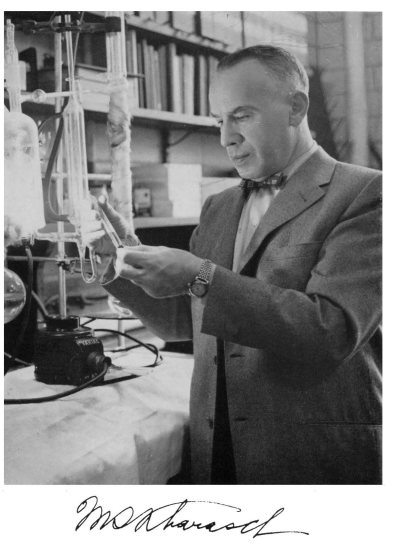
Thimerosal was first prepared by chemist Morris Kharasch at the University of Maryland in 1927. An interesting technical summary of the substance can be found on Drugbank Online.
Kharasch is known for his pioneering work in free radical chemistry in the 1930’s at the University of Chicago but before that began his work with organomercury chemistry during the 1920’s while at the University of Maryland. His development of Thimerosal was a result of his organomercury work. He is also credited with opening the door to organic free radical chemistry leading to improvements in rubber polymer chemistry and manufacture. His work led to the use of peroxides to reliably induce the so-called anti-Markovnikov addition of a protic acid (HX) to olefins. The presence of trace peroxides was behind the unexpected “reverse” Markovnikov addition of seen in work with the addition of hydrogen bromide to bromopropene.
Kharasch’s early work in organomercury chemistry led to the invention (and patenting) of what became known as Merthiolate (thimerosal). Kharasch later worked as a successful consultant for Eli Lilly, the Du Pont Company, US Rubber, the US Army and others. In many cases these companies were the assignees of the patents.
Little mention is made of Morris Kharasch as a prolific and wide-ranging inventor with, by my count, 117 US patents with him as the inventor. So, why did Kharasch bother to patent Thimerosal? Did he anticipate its biocidal and preservative properties?
Kharasch references make mention of a 1931 patent regarding Thimerosal. That patent is STABILIZED BACTERICIDE AND PROCESS OF STABILIZING IT, US 1862896, appln. filed August 22, 1931, assignee: no party disclosed. The patent claims a process for and claims of water-soluble solution compositions. Numerous additives include antioxidants, alkyl amines, ethanolamine and borax. Claim 19 is telling. It claims the composition of sodium ethyl mercurithiosalicylate (Thimerosal), monoethanolamine, borax as a buffer and enough sodium chloride to make the composition sufficiently isotonic with the body fluids. In this patent the Thimerosal composition itself is not claimed, but as a component of a stabilized water solution. Claim 14 claims a water solution composition of sodium ethyl mercurithiosalicylate and an antioxidant which tends to “inhibit the acquisition” (odd choice of words) of burning properties by the solution. This plus the claim of an isotonic composition strongly suggests anticipated medicinal applications.
STABILIZED ORGANO-MERCUR-SULFUR COMPOUNDS, US 2012820, appln. Feb 17, 1934, assignee: Eli Lilly and Company. Claims a stabilized solution of alkyl mercuric sulfur compounds in water with aliphatic 1,2-diamines. Also claims Ethylenediamine ethylmercurithiosalicylate composition. This is similar to the ‘896 patent but specified ethylenediamines.
As mentioned above, the biocidal nature of inorganic mercurials had been known for a long time. There was actually limited success in the treatment of syphilis. But they were long known for being very harsh on the patient and grew out of favor when better treatments came along.
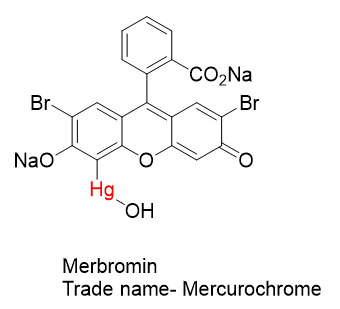
The antiseptic properties of Mercurochrome were discovered in 1918 at Johns Hopkins Hospital by urologist Hugh H. Young. Mercurochrome is essentially a dye molecule with an attached mercury warhead. There are three groups on the organic structure that aid in its solubility in water- NaO, CO2Na, and HgOH. Water solubility is often an important attribute in medicinal substances.
Given that antiseptic properties of organomercurials were known, it is perhaps not surprising that an enterprising Ukrainian immigrant with an interest in organomercurials like Morris Kharasch might want to patent his invention.
Atomic hydrogen (the major isotope protium) is the simplest, lightest and most abundant neutral atom in the universe. Molecular hydrogen, H2, is the simplest neutral molecule in the universe. Seems very simple. Well, hold on. Turns out that molecular hydrogen has two distinct forms and it relates to the business of nuclear spin.
Quantum mechanics (QM) is a basket of wavy weirdness. It is a model of the universe at the atomic and nuclear levels that is wildly different from the larger scale Newtonian universe of colliding billiard balls we humans casually observe. The QM model of the microscopic universe dates back to the early 1900’s and has been endlessly supported by experimental data, and it continues to surprise to this day. One of the fundamental QM quantities is ‘spin.’
Fundamental particles like electrons and protons have something referred to as spin angular momentum. In the larger scale Newtonian universe spinning is something that we equate with an object that is rotating about an axis. Protons have a measurable diameter- it is a finite sized object with mass, charge and spin. Electrons have mass, charge and spin also. However, electrons do not have a measurable size. They appear to be a point charge. So, how does an electron with no measurable size actually spin? What is it that spins? A point of clarification: Quantum spin has nothing to do with a rotating internal mass. It is a quantized wave property expressed in units the same as classical angular momentum (N·m·s, J·s, or kg·m2·s−1). So, what the hell is quantum spin?
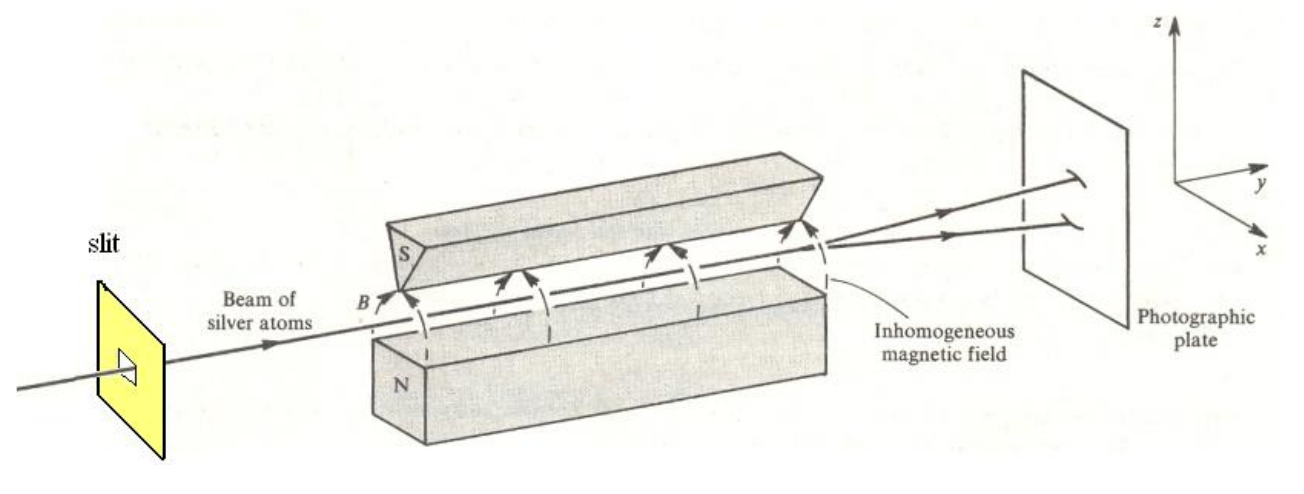
Spin angular momentum was inferred experimentally by the Stern-Gerlach experiment, which was first conducted in 1922. In this experiment, silver atoms were passed through a magnetic field gradient towards a photographic plate. Particles with no magnetic moment** would pass straight through unaffected. Particles with non-zero magnetic moment would be deflected by the magnetic field. In the experiment, the photographic plate revealed two distinct beams rather than a continuous distribution. The results indicate that the magnetic moment was quantized into two states. The magnetic moment at the time was thought to be due to the literal spinning of an electrically charged particle. They deduced that there were two spin configurations- i.e., they were quantized.
If you want to go deeper down the QM rabbit hole, be my guest. We’ll go forward with the notion of spin up and spin down. You’ll see how it works.
Atomic Hydrogen- Things Get Sciency
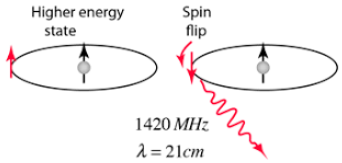
First, let’s look at a neutral hydrogen atom made of a proton and an orbiting electron. Both particles have spin and each can be in one of two states relative to the other- parallel and antiparallel or simply spin up and spin down for the sake of illustration. The spin combinations are up-up and down-up as shown in the figure below. Think of the arrows as bar magnets, so up-up would be two magnets with the north poles in parallel and the down-up would be bar magnets with magnetic poles facing opposite directions, or antiparallel. The arrangement where the magnets are aligned with identical poles in the same direction is less energetically favorable than when they are antiparallel. Since it is energetically down-hill, the up-up will want to flip to down-up or antiparallel lower energy state. The energy difference is lost as radio frequency radiation in the microwave band.
A spin flip to lower energy level results in the emission of a 1420 MHz (21 cm wavelength) radio frequency emission. This can be detected by a radio telescope though with some difficulty due to poor signal to background noise. Credit: http://hyperphysics.phy-astr.gsu.edu/hbase/quantum/h21.html
The spin transition energy is 9.411708152678(13)×10−25 Joules. Regions of space with more intense 21 cm radiation are thought to be regions of greater hydrogen atom abundance. These regions can be examined for redshifting to give clues about relative motion in space. The spiral structure of the Milky Way galaxy was discovered with 21 cm radio observations.
Molecular Hydrogen, H2
Molecular hydrogen consists of two hydrogen atoms that share a pair of electrons which provide the bonding force. The two electrons spend a finite amount of time between the protons canceling the repulsive force between them. It’s called a sigma bond. So far, so good. The bond is springy so the molecule can/does vibrate.
An unfortunate reality of chemistry– Like most topics, the more background you have on a chemistry principle, the more unifying and elegant it becomes. This means that sharing the beauty of the molecular world is a little more difficult that many would like. I regret this most sincerely. Most freshman chemistry involves balancing equations and PV=nRT math. Necessary but not always captivating. Freshman chemistry is much like the Hobbit in the Lord of the Rings trilogy. It’s a necessary prelude.
First, a Dive Down the QM Rabbit Hole
Ok. I couldn’t ignore the QM rabbit hole. The two electrons of an H-H bond must have opposite spins in order to form a covalent bond. An orbital represents a specific occupancy space for one or two electrons around an atom or molecule. They are places, not physical objects. The atomic orbital model is a mathematical construct based on spherical harmonics to define the shapes of space that electrons will occupy around the nucleus, depending on their energy and quantum numbers. The likelihood of finding an electron is wavelike within a region of space.
Two electrons can occupy one orbital if they have opposite spins. It’s referred to as spin pairing. (Note: I posted on the orbital stuff a few posts back.) This hard and fast rule of antiparallel spins occupying the same orbital is formalized by the Pauli Exclusion Principle. The Pauli Principle says specifically that “no two fermions with half-integral spins can occupy the same quantum state within the same quantum system“. Electrons are fermions and the upshot is that only 2 electrons of antiparallel spin can occupy a single orbital. If two or more orbitals of equal energy level are available, the electrons will occupy separate orbitals with the same spin. The manner of the filling of orbitals with electrons is covered by Hund’s Rule.
Finally, QM gives a number to an electron’s spin- the spin quantum number. According to the Pauli Exclusion Principle, two electrons in a single orbital must have different half-integral quantum spin numbers: +/- 1/2, or antiparallel- to occupy the same orbital space.
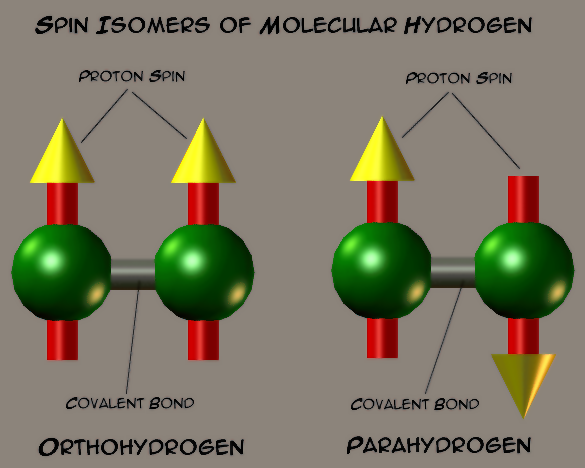
Because the two H-H electrons are spin paired, there is no net spin from them. However, the protons are a different matter. Their spins can be parallel (up-up or down-down) or anti-parallel (up-down). The anti-parallel spins cancel to give no net proton spin to the H-H. But, in the case of spin parallel, the H-H molecule definitely has net spin.
The spin parallel H-H molecules are called orthohydrogen and spin antiparallel H-H molecules are called parahydrogen. They are referred to as spin isomers or allotropes and are each distinct substances. There can be interconversion from orthohydrogen to parahydrogen molecules. The transition does not emit radiation, but it is exothermic. The parahydrogen is more stable by 1.455 kiloJoules (kJ/mol) per mole. Heating hydrogen will bring the composition to a maximum of 25 % ortho to 75 % para. When hydrogen is liquified, there is a slow conversion of ortho to para. It is worth noting that the enthalpy of evaporation of normal hydrogen (1:3 ortho to para) is 0.904 kJ/mol which is smaller than the 1.091 kJ/mole for 1:3 ortho to para conversion enthalpy for “normal” hydrogen. The conversion of orthohydrogen to parahydrogen in liquid form is exothermic and can result in hydrogen boil-off, leading to hydrogen loss and possibly causing a hazardous pressure rise. Those who regularly handle liquid hydrogen must be aware of this phenomenon. Orthohydrogen can also be catalytically converted to parahydrogen by contact with certain substances like ferric oxide, chromic oxide as well as several materials.
** Magnetic moment (from Wikipedia): magnetic moment is the magnetic strength and orientation of a magnet or other object that produces a magnetic field.
I saw the words “thoriated tungsten” somewhere in the literature and became curious as to what brought these two metals together. Before I get to thoriated tungsten, I’ll give a little background on tungsten and filaments made from it. There is a surprising amount of art and science in tungsten filaments. Tungsten filaments split into two broad applications- illumination and thermionic emission.
I’ve been curious about the effect of surging LED lighting demand on the tungsten filament business and tungsten demand overall. Naively, I guessed that there might be a noticeable effect on tungsten demand. A Google search only turns up people who want to sell a market research document. One of these web sites claims that demand for tungsten is expected to nearly double from 2021 to 2029 from $4.41 Billion to $7.56 Billion. The major demand for this metal is from the mining and drilling industries in the form of tungsten carbide cutting tools. The major producers of tungsten are China, Russia, Portugal, Austria and Bolivia, with China producing the vast majority.
All have a +2 cation and the tungstate -2 oxyanion. The WO4-2 tungstate anion has tetrahedral geometry similar to sulfate and can also form polyoxotungstates with octahedral WO6 geometry. Polyoxotungstates can form clusters by the sharing of octahedral oxygens similar to silicates. A large number of interesting polyoxotungstates have been identified.
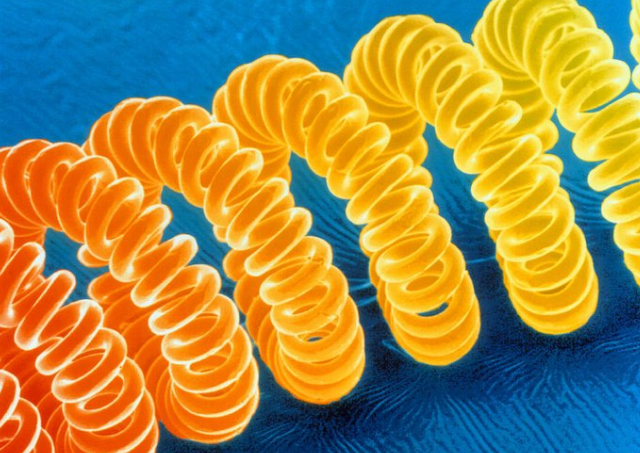
Tungsten filament- a coil of coils.
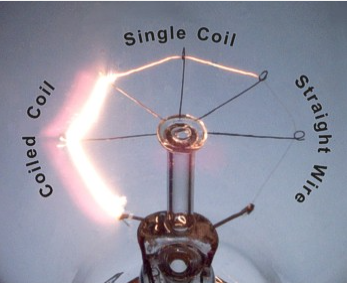
Tungsten turned out to be a perfect choice for light bulb filaments due to it high melting point and its mechanical integrity at high temperature. The coiled coil filament design proved to be much superior to a single coil or a straight filament. Below is a picture found at this website showing the illumination differences in the 3 configurations of the tungsten element. The difference in filament geometry is striking.
The photo above shows a 240 VAC 60 Watt bulb where a coiled coil has been uncoiled to produce a single coil section and a straight section. The whole coil is there. Light bulbs are filled with a mixture of inert nitrogen and argon at below atmospheric pressure. A coil allows a greater length of tungsten wire to be easily placed in the bulb and a coil of coils even more so. During operation the filament suffers heat losses by conduction and convection of the bulb gases. The primary coil and the coil of coils serve to reduce exposure of the filament to the cooling gas flow. The coil provides some self-heating due to the proximity of the coil to itself. It intercepts some of the radiant energy and heats further. In the coil of coils, this effect is much more pronounced as seen in the picture above. The Lamptech website containing this photo is well worth a visit.
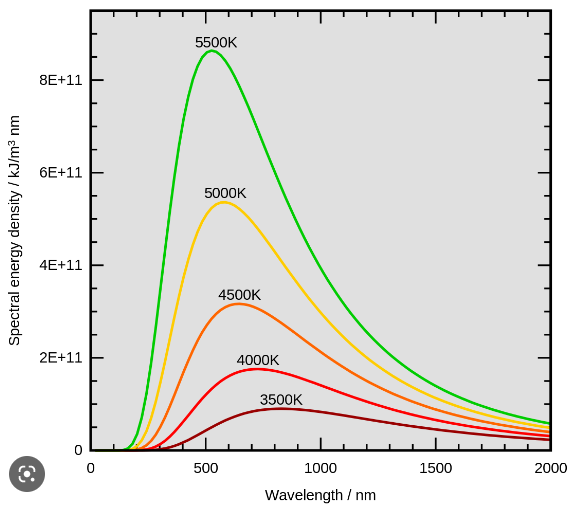
As mentioned above, one advantage of using tungsten as a filament is that it has an extremely high melting temperature of 3422 oC (3695 K). This allows the filament to be heated to very high temperature with the resulting blue shifted black body curve (above), This allows the spectrum to be brighter in the shorter wavelengths and consequently less reddish to the eye than a lower temperature filament. Wiens Law is the basis of color temperature.
When you shop for LED light bulbs, you might notice that LED bulbs are rated on the basis of color temperature. The lower the color temperature, the more yellow/red the light will be. The higher the color temperature, the more whitish the light will be.
However, with high operating temperatures a filament can evaporate, removing mass and robustness. Tungsten filaments, among others, are susceptible to this mode of failure. Another mode of failure occurs when a tungsten filament is hung vertically. Convection of the hot gasses in the bulb causes the top of the filament to get hotter and fail sooner. You’ll notice that lamp filaments tend to be strung horizontally.
Why tungsten halogen? Over time a tungsten filament will evaporate enough tungsten to blacken the bulb and become fragile. The presence of a halogen vapor in a light bulb causes a reaction between the tungsten and the halogen leading to redeposition of the tungsten back to the filament. However, this process requires higher bulb envelop temperatures, i.e., >250 oC. I have to assume that the small size of halogen lamps is to assure that the bulb temperature remains high for the tungsten-halogen recycle.
Thermionic Emission
Tungsten filaments in light bulbs is an application familiar to everyone. But there is another important use of tungsten filaments. The production of electron emission from filaments has been in use for a very long time. A hot filament or other hot surface under vacuum can be made to produce electron beams that can be accelerated or deflected and focused to do useful things. The electron beams can be made to carry modulated signals that can be put to use in detecting or radiating radio signals for radio, television or a myriad of other uses. The old vacuum picture tubes in early television used a filament to generate an electron beam that could be directed to scan across a phosphor coated surface to produce moving images.
What caught my attention when sorting through the tungsten literature was the mention of thoriated tungsten filaments. This topic goes back to the 1920’s with Irving Langmuir. In 1923 he published a paper in Physical Review Langmuir found that the rate of electron emission from 1 to 2 % thoriated tungsten to be “it was discovered that by suitable treatment the filaments, containing 1 to 2 per cent of thoria, could be activated so as to give an electron emission many thousand times that of a pure tungsten filament at the same temperature.” He found that the efficiency and life of a tungsten filament could be extended by spiking the tungsten with thorium oxide. He postulated that thorium is reduced and migrates to the surface of the tungsten filament forming at most an atomic monolayer. Thermionic emission occurs when a hot object like a filament evaporates electrons.
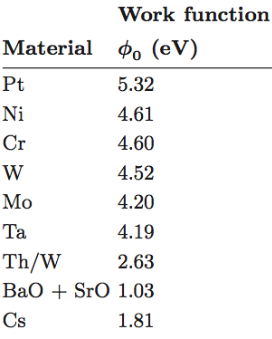
Every substance has work function energy in eV that is required to remove an electron from a surface. Additives to tungsten like lanthanum, cerium or thorium or their oxides have a lower energy work function than does tungsten and will produce a greater flux of electrons. This even applies to TIG welding where an electric discharge must jump across a workpiece and a sharpened tungsten rod.
A 1-2 % thoriated tungsten welding rod or filament will allow thorium to migrate to the surface via grain boundaries while in operation and deposit on the surface. The work function energy of thorium is lower than that of tungsten, so the thoriated surface can release more electrons at a given temperature.
While cockeyed optimists are working toward a new age of electric vehicles in the glare of an admiring public, I find myself standing off to the side mired in skepticism. What are the long-term consequences of large-scale electrification of transportation?
The industrial revolution as we in the west see it began as early as 1760 and continues through today. Outwardly it bears some resemblance to an expanding foam. A foam consists of a large number of conjoined bubbles, each representing some economic activity in the form of a product or service. A business or product hits the market and commonly grows along a sigmoidal curve. Over time across the world the mass of growing bubbles expand collectively as the population grows and technology advances. Bubbles initiate, grow and sometimes collapse or merge as consolidation and new generations of technology come along and obsolescence takes its toll.
The generation of great wealth often builds from the initiation of a bubble. The invention of the steam engine, the Bessemer process for the production of steel, the introduction of kerosene replacing whale oil, the Haber process for the production of ammonia and explosives, and thousands of other fundamental innovations to the industrial economy played part in the growing the present mass of economic bubbles worldwide.
After years of simmering on the back burner, electric automobile demand has finally taken off with help from Tesla’s electric cars. Today, electric vehicles are part of a bubble that is still in the early days of growth. The early speculators in the field stand the best chance of winning big market share. A major contribution to this development is the recent availability of cheap, energy dense lithium-ion batteries.
Of all of the metals in the periodic table, lithium is the lightest and has the greatest standard Li+/Li reduction potential at -3.045 volts. The large electrode potential and the high specific energy capacity of Lithium (3.86 Ah/gram) makes lithium an ideal anode material. Recall from basic high school electricity that DC power = volts x amps. Higher voltage and/or higher amperage gives higher power (energy per second). Of all the metals, lithium has the highest reduction potential (volts).
Rechargeable lithium batteries have high mass and volume energy density which is a distinct advantage for powering portable devices including vehicles. Progress in the development of lithium-ion batteries was worth a Nobel Prize in 2019 for John B. Goodenough, M. Stanley Whittingham and Akira Yoshino.
All of this happy talk of a lithium-powered rechargeable future should be cause for celebration, right? New deposits of lithium are being discovered and exploited worldwide. But cobalt? Not so much. Alternatives to LiCoO2 batteries are being explored enthusiastically with some emphasis on alternatives to cobalt. But, the clock is ticking. The more infrastructure and sales being built around cobalt-containing batteries, the harder it will become for alternatives to come into use.
One of the consequences of increasing demand for lithium in the energy marketplace is the effect on the price and availability of industrial lithium chemicals. In particular, organolithium products. The chemical industry is already seeing sharp price increases for these materials. For those in the organic chemicals domain like pharmaceuticals and organic specialty chemicals, common alkyllithium products like methyllithium and butyllithium are driven by lithium prices and are already seeing steep price increases.
Is it just background inflation or is burgeoning lithium demand driving it? Both I’d say. Potentially worse is the effect on manufacturers of organolithium products. Will they stay in the organolithium business, at least in the US, or switch to energy-related products? It is my guess that there will always be suppliers for organolithium demand in chemical processing.
A concern with increasing lithium demand has to do with recycling of lithium and perhaps cobalt. Hopefully there are people working on this with an eye to scale up soon. A rechargeable battery contains a dog’s lunch of chemical substances, not all of which may be economically recoverable to specification for reuse. In general, chemical processes can be devised to recover and purify components. But, the costs of achieving the desired specification may price it out of the market. With lithium recovery, in general the lithium in a recovery process must be taken to the point where it is an actual raw material for battery use and meets the specifications. Mines often produce lithium carbonate or lithium hydroxide as their output. Li2CO3 is convenient because it precipitates from aqueous mixtures. It must also be price competitive with “virgin” lithium raw materials as well.
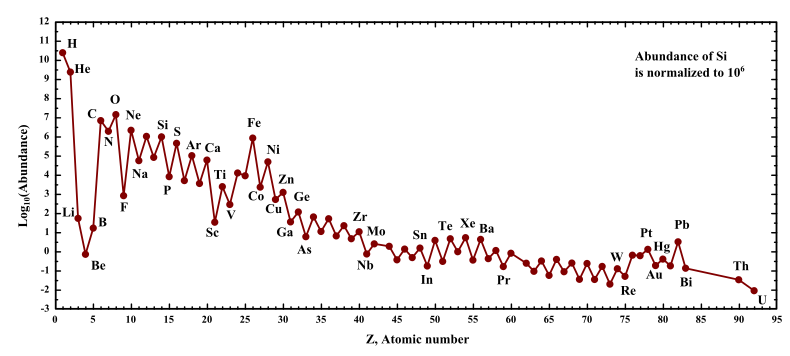
Lithium ranks 33rd in terrestrial abundance and less than that in cosmic abundance. Unlike some other elements like iron, lithium nuclei formed are rapidly destroyed in stars throughout their life cycle. Lithium nuclei are just too delicate to survive stellar interiors. The big bang is thought to have produced a small amount of primordial lithium-7. Most lithium seems to form during spallation reactions when galactic cosmic rays collide with interstellar carbon, nitrogen and oxygen (CNO) nuclei and are split apart from high energy collisions yielding lithium, beryllium and boron- LiBeB. All three elements of LiBeB are cosmically scarce as shown on the chart below.
Lithium is found chiefly in two forms geologically. One is in granite pegmatite formations such as the pyroxene mineral spodumene, or lithium aluminum inosilicate, LiAl(SiO3)2. This lithium mineral is obtained through hard rock mining in a few locations globally, chiefly Australia.
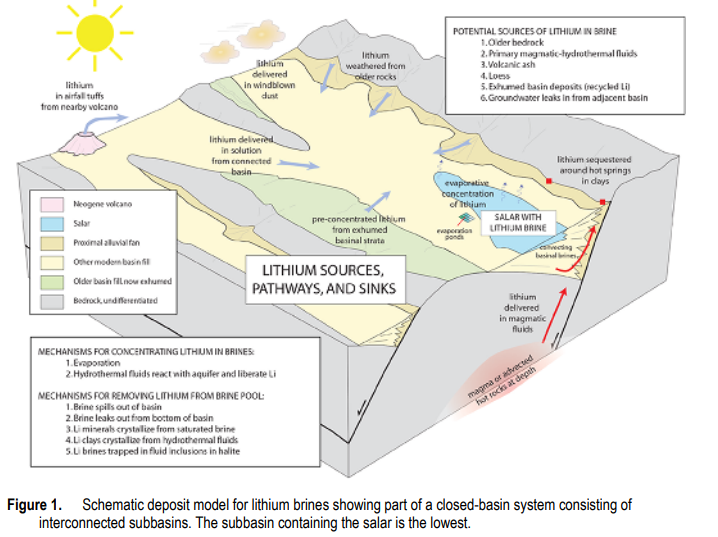
Source: “A Preliminary Deposit Model for Lithium Brines,” Dwight Bradley, LeeAnn Munk, Hillary Jochens, Scott Hynek, and Keith Labay, US Geological Survey, Open-File Report 2013–1006, https://pubs.usgs.gov/of/2013/1006/OF13-1006.pdf
Chemical Definition: Salt; an ionic compound; A salt consists of the positive ion (cation) of a base and the negative ion (anion) of an acid. The word “salt” is a large category of substances, but for maximum confusion it also refers to a specific compound, NaCl or common table salt. In this post the word refers to the category of ionic compounds.
The other source category is lithium-enriched brines. The US Geological Survey has proposed a geological model for brine or salt deposition. According to Bradley, et al.,
“All producing lithium brine deposits share a number of first-order characteristics: (1) arid climate; (2) closed basin containing a laya or salar; (3) tectonically driven subsidence; (4) associated igneous or geothermal activity; (5) suitable lithium source-rocks; 6) one or more adequate aquifers; and (7) sufficient time to concentrate a brine.”
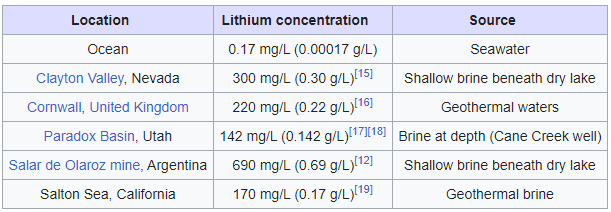
Lithium and other soluble metal species are extracted from underground source rock by hot, high pressure hydrothermal fluids and eventually end up in subsurface, in underwater brine pools or on the surface as a salt lake or a salt flat or salar. These deposits commonly accumulate in isolated locations that have prevented drainage. An excellent summary of salt deposits can be found here.
Critical to any kind of mineral mining is the definition of an economic deposit. The size of an economic deposit varies with the market value of the mineral, meaning that as the value per ton of ore increases, the extent of the economic deposit may increase to include less concentrated ore. If you want to invest in a mine, it is good to understand this. A good opportunity may vanish if the market price of the mineral or metal drops below the profit objectives. Hopefully this happens before investment dollars are spent digging dirt.
Lithium mining seems to be a reasonably safe investment given the anticipated demand growth unless страшный товарищ путины invasion of Ukraine lets the nuclear genie out of the bottle.
Just for fun, there is an old joke about the definition of a mine-
Mine; noun, a hole in the ground with a liar standing at the top.
Good gravy. What a freakin’ mess. It seems like everywhere investigators look, they find perfluorinated alkyl residues- drinking water, fish, people, etc. These fluorinated substances are known as PFAS, PFOS, PFOA, PFHxS or perfluorohexane sulfonic acid, and PFNA or perfluorononanoic acid. The “per” in front of perfluorinated just means that the molecule has as many fluorine atoms connected as possible.
According to the National Association for Surface Finishing, PFAS “properties are useful to the performance of hundreds of industrial applications and consumer products such as carpeting, apparels, upholstery, food paper wrappings, wire and cable coatings and in the manufacturing of semiconductors.“
I will use the term “PFAS” to represent any and all of variations in this small molecule category of perfluorinated substances.
The EPA has kicked into overdrive and is ginning up new regulations, including drinking water standards. “EPA’s proposal, if finalized, would regulate PFOA and PFOS as individual contaminants, and will regulate four other PFAS – PFNA, PFHxS, PFBS, and GenX Chemicals – as a mixture … PFOA and PFOS: EPA is proposing to regulate PFOA and PFOS at a level they can be reliably measured at 4 parts per trillion.” This is around the detection limit for these compounds.
PFAS can be present in our water, soil, air, and food as well as in materials found in our homes or workplaces, including:
Drinking water – in public drinking water systems and private drinking water wells.
Soil and water at or near waste sites – at landfills, disposal sites, and hazardous waste sites such as those that fall under the federal Superfund and Resource Conservation and Recovery Act programs.
Fire extinguishing foam – in aqueous film-forming foams (or AFFFs) used to extinguish flammable liquid-based fires. Such foams are used in training and emergency response events at airports, shipyards, military bases, firefighting training facilities, chemical plants, and refineries.
Manufacturing or chemical production facilities that produce or use PFAS – for example at chrome plating, electronics, and certain textile and paper manufacturers.
Food – for example in fish caught from water contaminated by PFAS and dairy products from livestock exposed to PFAS.
Food packaging – for example in grease-resistant paper, fast food containers/wrappers, microwave popcorn bags, pizza boxes, and candy wrappers.
Household products and dust – for example in stain and water-repellent used on carpets, upholstery, clothing, and other fabrics; cleaning products; non-stick cookware; paints, varnishes, and sealants.
Personal care products – for example in certain shampoo, dental floss, and cosmetics.
Biosolids – for example fertilizer from wastewater treatment plants that is used on agricultural lands can affect ground and surface water and animals that graze on the land.
Details on specific molecular pharmacology mechanisms are a bit thin. The perfluorinated part of PFAS is chemically quite inert and very hydrophobic, but often the perfluorinated group is connected to something polar like a carboxylic acid as with PFOA which can give surfactant properties. Most of the utility of PFAS comes from the fluorinated part. About the only way to get a chemical reaction with perfluorinated organic hydrocarbons is to contact them with alkali metals like sodium or potassium, or even with magnesium or aluminum. The last two are probably less reactive than the alkali metals. The good news is, precious few have alkali metals lying around to blunder into contact with TeflonTM.
All of this toxicity talk seems to be at the “increased this” or “decreased that” correlation stage presently. Another table from the EPA website-
Current peer-reviewed scientific studies have shown that exposure to certain levels of PFAS may lead to:
Reproductive effects such as decreased fertility or increased high blood pressure in pregnant women.
Developmental effects or delays in children, including low birth weight, accelerated puberty, bone variations, or behavioral changes.
Increased risk of some cancers, including prostate, kidney, and testicular cancers.
Reduced ability of the body’s immune system to fight infections, including reduced vaccine response.
Interference with the body’s natural hormones.
Increased cholesterol levels and/or risk of obesity.
Along the way to the consumer are the PFAS chemical manufacturers and their customers that formulate the PFAS into their products. Then there are the retailers who sell PFAS-loaded products to the consumer. The benefits of perfluorinated materials are often revealed as claims for non-stick, repellency or fire retardancy. At some point the whole chain will have to back off on their repellency marketing.
Just for fun, the only substance that a gecko’s foot cannot stick to is PTFE.
So, should all use of PFAS substances be abolished? I think that applications can be prioritized according to relative importance. Fire retardancy is a health and safety related use and is a very important attribute in certain circumstances like fire extinguishing agents. Liquid fuel fires are special because spraying water on burning fuel will result in the fuel floating on top of water and continuing to burn. Foam is used because it can float on top of the fuel and smother it. A thoughtful evaluation of retaining PFAS agents for a select few applications like fire suppression should be made.
Using PFAS to prevent grease stains from soaking through fast food wrappers, water repellency or stain resistance on carpets is likely a basket of applications that we can live without.
In doing background reading for this I found something very interesting. There is such a thing as “Teflon Flu”, also known as polymer fume fever. When a perfluorinated non-stick coating, say, on a pan is subjected to temperatures of around 450 C, the coating begins to decompose and will generate vapors that are hazardous.
We should all remember that TeflonTM is a Chemours trademark and refers to a polytetrafluoroethylene polymer (PTFE). PTFE is a macromolecule unlike PFAS substances. PTFE is in the same persistence class as a “forever substance,” but as an insoluble solid polymer it is not mobilized at the level of molecules so migration into the cellular architecture isn’t viable path as with PFAS. The PTFE polymer is extraordinarily useful in the world and has many, many uses as a polymeric, chemically inert material and should not be cast into the dumpster with its cousins, the PFAS compounds.
The Drug Enforcement Agency (DEA) reports that it has seized xylazine and fentanyl mixtures in 48 of 50 states in the US. They mention that while fentanyl is responsive to naloxone, xylazine is not an opioid. Consequently, an overdose of a fentanyl/xylazine mixture may not respond to naloxone as expected.
DEA says that the great majority of fentanyl in the US comes from the Sinaloa and Jalisco cartels in Mexico, with the raw materials coming from China.
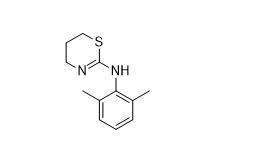
Xylazine is used in veterinary medicine as a sedative with analgesic and muscle relaxant properties. It would be interesting to see what the sulfur brings to the table as far as biological activity goes. You have to go to a bit of trouble to put the sulfur there so it must do something.
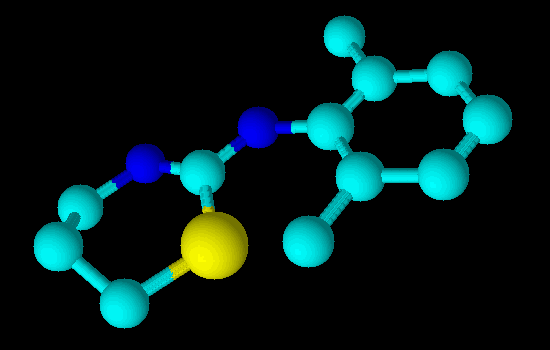
Ordinary drawing of xylazine free base.Ball and stick rendering of Xylazine absent the hydrogen atoms. Dark blue, Nitrogen; light blue Carbon, yellow, Sulfur. The conformation is not optimized.
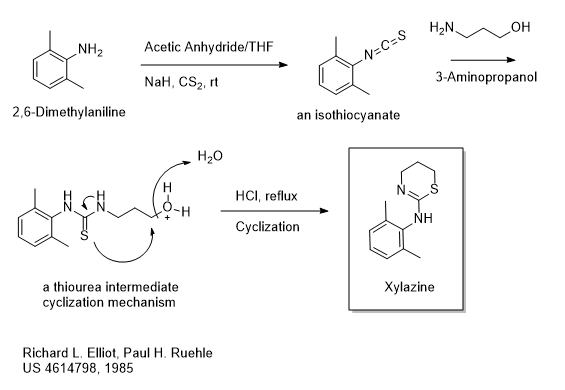
One reaction scheme for the preparation of xylazine is shown below. It is from expired US patent 4614798A (1985), Example 1, assigned to Vetamix. This prep uses acetic anhydride which is a List II chemical in the US. An acetamide intermediate is prepared from the aniline which is then reduced with sodium hydride and treated with carbon disulfide to give the reactive isothiocyanate intermediate. Finally, 3-aminopropanol adds to the isothiocyanate carbon to give the thiourea alcohol. Acid catalyzed cyclization by displacement of water by sulfur gives the xylazine product. This is some good meat-and-potatoes heterocyclic chemistry.
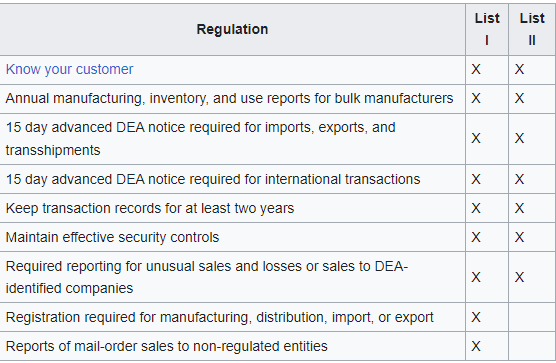
List II chemicals are subject to few serious reporting requirements in the US as seen in the table below. I suspect that the DEA benefits from good will disclosures. Following acetic anhydride shipment would be a good start in finding illicit labs in the US for several illegal drugs including xylazine, but it seems to be made in Mexico. Raw materials from China and drugs from Mexican labs add up to a very hard problem. Hard to tell how the cartel boys are making xylazine just from the internets.
“Here we report evidence of superconductivity on a nitrogen-doped lutetium hydride with a maximum Tc of 294 K at 10 kbar, that is, superconductivity at room temperature and near-ambient pressures.” Emphasis mine.
According to Wikipedia, while lutetium isn’t particularly abundant, it is more abundant than silver in the earth’s crust. The word hydride is a little confusing here. In some contexts is refers to a metal with absorbed hydrogen as a solid solution. To chemists like me it suggests H– anions bound to a metal cation. From what I can tell, reality sits somewhere between these two bookends.
The abstract says that 10 kbar is near-ambient pressure. This number converts to 9869 atmospheres though it is below megabar pressures. I guess I’m not calibrated properly for this.
The abstract is available but the article sits behind a paywall. Interesting research but not presently worth $39.95 to me today.
The Norfolk Southern train derailment and fire in East Palestine, OH, has spread into the political dumpster. By not appearing near the crash site promptly, both Biden and Buttigieg are feeling the heat of the GOP panic machine. The single plank on the GOP platform is to knock down Democrats at every opportunity. While the news organs of the GOP are busy trying to blame the Biden administration for the accident, fire and contamination, citizens are expressing dismay over not knowing what to do going forward. They aren’t receiving much advice or direction from EPA about how much they should be worried about contamination and exposure to the released chemicals. In fact, on the ground it has been hard to see the hand of government anywhere. Their frustration is normal and understandable. I would be frustrated too.
Let’s step back a minute and examine the situation from 50,000 ft. The last thing we want in government is for a proper response to an emergency of this scale to require the president to personally lead the emergency response. The same is true for the Secretary of Transportation. Good leaders delegate responsibility to specialists for situations like this. Good leaders are watchful but stay out of the way of the experts. Good leaders make sure that the people on the ground have the resources they need to do their jobs. Ok, Biden didn’t respond publicly to the situation early enough, but that is not to say that things weren’t happening. But, he has 330,000,000 American back-seat drivers to make happy. That’s his job.
Let’s remind ourselves that Biden and NATO are also busy trying to prevent the start of WWIII.
As with an emergency of any scale, it takes responders some time to understand the situation and then to bring resources to bear. In the mean time, the NTSB was promptly dispatched and has already published preliminary report RRD23MR005 on the event. It is very interesting to see that many of the safety systems worked. The overheated wheel was detected and an emergency braking procedure was put into action just before the derailment occurred.
Ok, Biden and Buttigieg could have been quicker to publicly extend sympathy and the promise of relief. Complaining about this is like accusing grandma of not giving you a kiss while she was trying to put out a fire in the kitchen. But contrast this PR error of omission with the antics of #45 in Puerto Rico after the recent hurricane. Remember how he tossed rolls of paper towels as mock support during an interview down there? MAGA people have no leg to stand on with presidential expressions of sympathy.
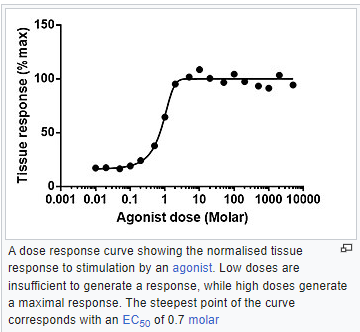
As far as what kind of toxic threat there is to humans and what potential environmental insult there will be, the situation has not fully played out yet. This will need to be studied for years. There is acute toxicity and there is chronic toxicity. With most chemicals there will be a clear dose-response relationship with chemical dosing if you choose the right experiment to do. However, that relationship can become quite uncertain with low dosing. The health effects of exposures from the East Palestine derailment cannot be measured with high precision over the long haul. Genuine toxic effects are over-printed on a background of natural disease. Diseased tissues do not have little signs that say “I was caused by vinyl chloride dosing”. Histology can characterize cell types and correlate them with known chemical insult, but only a jury can say if any particular conclusion will hold up in court. With toxicity effects, certainty is not always what you get.
Paracelsus said in 1538 that “All things are poison, and nothing is without poison; the dosage alone makes it so a thing is not a poison“. That observation is still true today.
For the study the authors used 4 ions considered signatures of HF-related activity- chloride, bromide, barium and strontium. These ions were considered the likely mode of detection if and when surface waters were affected. They are usually found in high concentration in flowback and produced water from HF wells and are considered signatures.
Some vocabulary-
Environmental externalities– the negative consequences on nature and biodiversity that result from human activity. (Google)
Internalities– An internality at the organizational level (an “organizational internality”) is the product of organizational practice, which part or all of an organization engages in that produces a cost or benefit within the organization, which is not considered when engaging in that practice.
Produced water– Produced water is composed of formation water, hydrocarbons, and fluids introduced during drilling.
Some Key Findings-
“Significant improvements were found in water quality based on signature salts after mandates are introduced.”
“After disclosure mandates, operators pollute less per unit of production, use fewer toxic chemicals, and cause fewer spills and leaks of HF fluids and wastewater.”
They “… show that disclosure enables public pressure and that this pressure facilitates internalization“.
Barium is injected into oil and gas wells in the form of barite (BaSO4) to densify the drilling fluid although ilmenite (FeTiO3) has been used as well.
“Produced waters typically have large ionic strengths including large Sr concentrations compared to surface water and shallow groundwater. If the Sr isotopic compositions of produced waters differ substantially from surface water and groundwater, then the Sr ratios could be a valuable and sensitive indicator of small amounts of contamination from produced water.“
The strontium isotopic ratio (87Sr/86Sr) can be an indicator of produced water contamination in surface water.

 Lamentations on Chemistry